
Computing & Internet
-

Python Workout, Second Edition
You know Python’s syntax, but when it comes to real projects you freeze or second-guess yourself. You are not alone. Many learners struggle to turn knowledge into action, even after completing tutorials or coursework. What if you could practice daily with focused challenges that build confidence, fluency, and muscle memory for writing clean, efficient, and professional Python code?
- 50 focused exercises: build muscle memory for core and advanced language features.
- Built-in data structures: write shorter, faster code with lists, tuples, dictionaries, and sets.
- Functional techniques: unlock map, filter, and comprehensions for elegant data pipelines.
- Object-oriented drills: design, create, and extend classes that stay maintainable.
- Iterators and generators: process large data streams while saving memory and time.
- Full solutions and explanations: verify your approach and learn professional idioms.
Python Workout by veteran instructor Reuven M. Lerner offers a practical, workbook-style route to skill mastery.
Each self-contained challenge targets a specific concept, then walks you through a clear, annotated solution. The progressive sequence mirrors real coding tasks so readers advance naturally from fundamentals to powerful patterns.
Finish the book able to read, refactor, and write Python that stands up in production code reviews. The habits you form here stick because you learn by doing, not by memorizing.
Ideal for developers who know basic syntax and need fluency for work, study, or personal projects.
Read more
From £16.22Python Workout, Second Edition
From £16.22 -

How to Share Your Kindle Library with Family: Set Up Amazon Household in 5 Minutes: 2026 Complete step-by-step guide to Amazon Household.
Share Your Kindle Books with Family in Just 5 Minutes – Complete 2026 Amazon Household Setup Guide
Unlock the full potential of your Amazon Prime membership and share your entire Kindle library with your family – legally, easily, and for free! This comprehensive 2026 guide shows you exactly how to set up Amazon Household (Amazon Family) to share purchased Kindle books, Prime Video, audiobooks, and more.
What You’ll Learn:
✓ Step-by-step setup instructions for Amazon Household – works for complete beginners
✓ 2026 policy updates including October 2025 same-address enforcement and 12-month waiting period
✓ Payment sharing requirements and privacy protections
✓ Kindle book sharing limitations – publisher restrictions, device limits, geographic availability
✓ Prime Student compatibility – critical information before upgrading
✓ Troubleshooting solutions for books not appearing, sync issues, and lingering content
✓ Official Amazon policies vs. user workarounds – clearly distinguishedCritical 2025-2026 Updates:
-
Same-address verification (enforced October 2025)
-
New 12-month waiting period (changed from 180 days)
-
Teen account program discontinued (April 2025)
-
Prime benefit sharing restrictions
-
Customer Service override options
Perfect For:
→ Families sharing Kindle books without buying duplicates
→ Couples combining Amazon accounts and Prime memberships
→ Parents setting up child profiles with parental controls
→ Anyone confused by Household vs. Family Library featuresCommon Questions Answered:
-
Can I share Kindle Unlimited books? (No – individual subscriptions required)
-
Do both adults need Prime? (No – one membership covers both)
-
Can I share with friends? (No – same address strictly enforced)
-
What happens if I leave? (Keep your purchases, lose shared access)
-
How to avoid the 12-month wait? (Customer Service workarounds explained)
What’s Inside:
📚 Quick Setup Guide (11 pages) – Essential steps for getting started fast
📚 Comprehensive Reference Guide – Every detail and troubleshooting scenario
📚 Official Amazon sources verified and cited throughout
📚 Privacy and security warnings
📚 Content ownership facts – licensing vs. buyingBonus Sections:
✓ Managing shared content after setup
✓ What to do with two Prime memberships
✓ Child profile setup without email invitations
✓ Device filter settings for viewing shared books
✓ Publisher restrictions and unshareable books
✓ Digital content inheritance limitationsWhy This Guide?
Unlike outdated tutorials referencing 180-day policies, this 2026 edition reflects Amazon’s latest 12-month restriction and October 2025 changes. Every claim is cited with official sources or marked as user-reported.
Requirements:
-
Web browser required (mobile app doesn’t work)
-
Personal Amazon accounts only (not Business Prime)
-
Full-price Prime (Prime Student cannot use Household)
-
US or UK account for Kindle sharing
Save money, share smarter, maximize your Amazon Prime benefits today!
Stop buying duplicate Kindle books. Set up Amazon Household in 5 minutes and share your library legally and free.
Scroll up and click “Buy Now” for instant access!
Read more
From £2.41 -
-
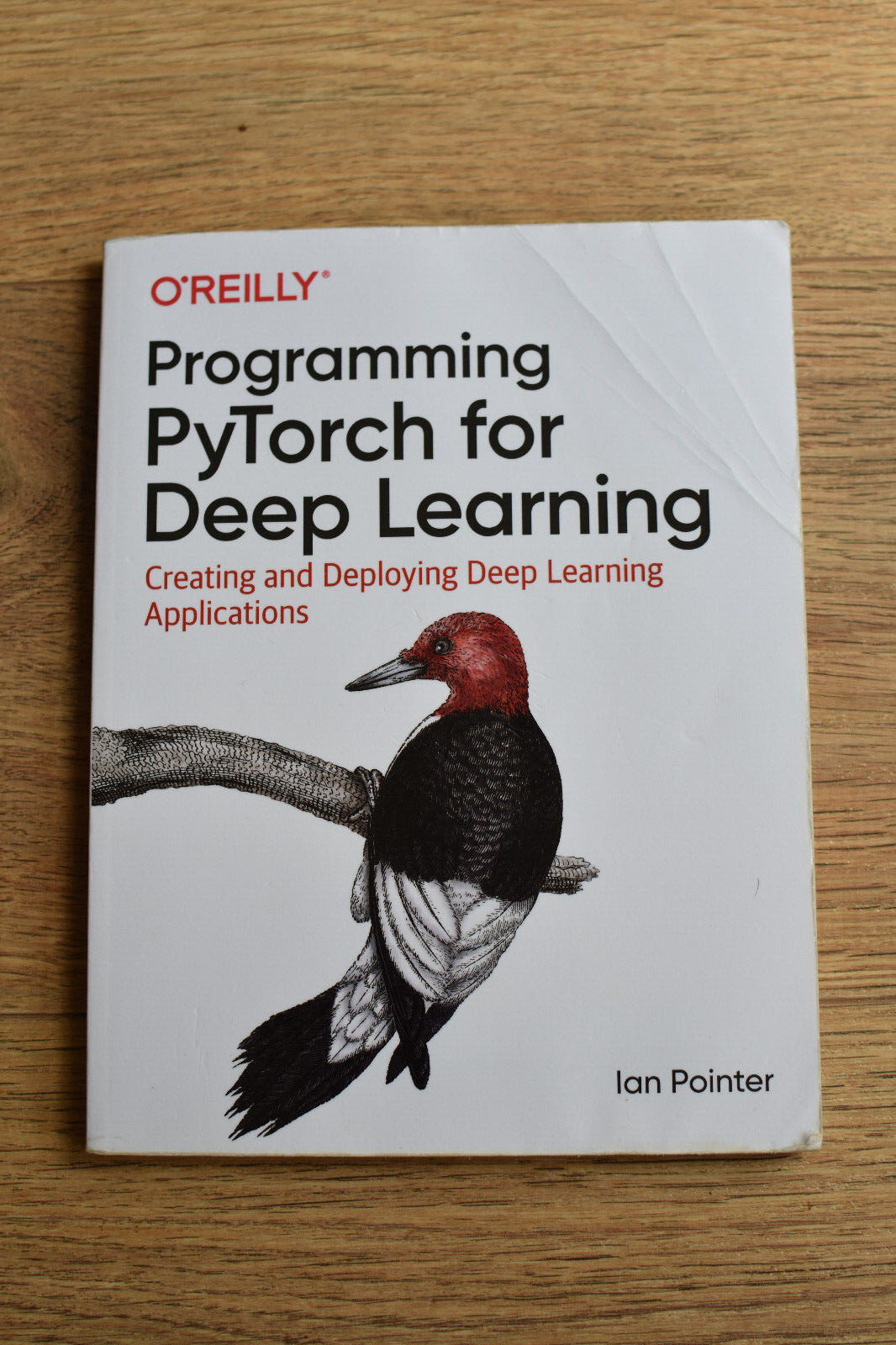
Deep Learning with PyTorch, Second Edition
Stop guessing at PyTorch syntax, start building production-ready models today. Bridge the gap between theory and working code with guided, hands-on projects. Confused by transformers and diffusion? Learn them through clear, incremental steps. Grow from basic tensors to complete neural networks without drowning in jargon. Feel confident diagnosing training issues using PyTorch’s powerful visualization tools. Stay market-relevant by mastering the latest generative AI techniques right now.
- Project-based learning: Build an end-to-end medical image classifier that cements every concept.
- Flexible PyTorch APIs: Customize layers, losses, and optimizers for research or production speed.
- CNNs, RNNs, Transformers: Apply the right architecture to vision, language, and multimodal tasks.
- Generative models: Create text and images with large language models and diffusion networks.
- Optimization know-how: Improve accuracy, reduce inference cost, and streamline model deployment.
Deep Learning with PyTorch, Second Edition, by Luca Antiga, Eli Stevens, Howard Huang, and Thomas Viehmann, delivers a credible, code-first roadmap for serious AI practitioners. The book guides you through every stage, from data loading to scaled deployment.
Each chapter introduces a single concept, then immediately applies it to a working project. Updated coverage of transformers, diffusion, and distributed training keeps the content current. Friendly explanations, annotated code, and ample visuals make complex ideas clear and actionable.
Finish the book able to design, train, and ship state-of-the-art models using PyTorch’s flexible toolkit. You will upskill confidently and join the ranks of engineers pushing AI forward.
Ideal for Python developers, data scientists, and ML engineers seeking practical mastery of modern deep learning.
Read more
From £27.47Deep Learning with PyTorch, Second Edition
From £27.47 -

Server-Side WebAssembly: Lightweight Apps with Wasm
Shrink your services, not your ambitions. Traditional backends often feel heavy, costly, and slow to adapt. Server-Side WebAssembly shows you how to build lightning-fast, portable backends that run anywhere, giving you the power of Wasm without the pain of complex rewrites.
- Polyglot components: Reuse Rust, JavaScript, and Python code without rewrites.
- OCI-compliant containers: Package Wasm workloads once, deploy on any registry or platform.
- Kubernetes scaling: Orchestrate tiny binaries that launch in milliseconds and slash cloud bills.
- Edge readiness: Serve users closer, lower latency, and maximise device performance.
- Built-in security: Sandboxed execution reduces attack surface for production workloads.
- Hands-on project path: Key-value, HTTP, and ML components show real workflows step by step.
Serve- Side WebAssembly by WebAssembly contributor Danilo Chiarlone delivers a clear, code-first roadmap for next-gen back-end development.
Starting with essential Wasm fundamentals, the book moves quickly into building production-grade microservices. You containerise components, push them to registries, and integrate with Kubernetes, serverless, and edge platforms. Each chapter layers new skills through a running sample app.
By the final page, you will confidently compile, package, and scale Wasm workloads from multiple languages, tap hardware isolation, and connect to cloud resources and machine-learning models.
Ideal for backend developers, DevOps engineers, and system architects seeking leaner, faster, portable services.
Read more
From £26.99 -

The Linux Memory Manager
The Linux memory management subsystem hasn’t had a definitive reference since 2004. The Linux Memory Manager fills this void with a modern, in-depth exploration of how Linux handles memory, combining high-level overviews with detailed code analysis. Written by a Linux kernel maintainer and supported by insights from memory management experts, this book provides readers with a rare opportunity to explore the subsystem at both the conceptual and code levels. This 1,300-page guide goes beyond surface explanations, showing how core principles are implemented in the Linux kernel source and serving as both a study guide and an on-the-job reference for years to come.Read more
From £16.00The Linux Memory Manager
From £16.00 -

The Future of Fraud (The FUTURES Series)
Fraud is BIG business – in this latest edition to the FUTURES series, find out the new (and old) ways fraudsters are targeting us, what future technological threats await, and how we can protect ourselves.
Humans have been ripping each other off since they first discovered the concept of lying but in 300 BC, the first ever official record of a fraud case was made. A merchant in Greece took out an insurance policy, borrowed money and planned to sink his boat. Unfortunately for him, things did not go according to plan. Since then, fraud has become more complex and harder to detect, as technology has evolved. So how can we protect ourselves now and in the future, and what new dangers do we need to be looking out for?
Deeply researched and littered with expert testimony, The Future of Fraud will explore interesting fraud cases past and present, and expose how the technology we depend upon today is also perfectly poised to exploit us: from social media, the dark web and gaming, to cryptocurrency and artificial intelligence. And as well as parting us from our money, fraud is eroding the trust between humans and the state, and between each other.
The only way to tackle the fraud epidemic, argues Holmes, is head on, via education, language, technology and regulation. We need everyone to understand the dangers and have protections in place to stop the bad guys. Are we fighting a losing battle, or can we make the future a safer place for everyone?
Also available in the FUTURES series:
The Future of Travel by Daniel Maurer
The Future of the Novel by Simon Okotie
The Future of Energy by Richard Black
The Future of the Self by Joanna Nadin
The Future of Songwriting by Ros Taylor
The Future of Trust by Ros Taylor
The Future of War Crimes Justice by Chris Stephen
The Future of Wales by Rhys Thomas
Read more
From £3.30The Future of Fraud (The FUTURES Series)
From £3.30 -

Designing Data-Intensive Applications: The Big Ideas Behind Reliable, Scalable, and Maintainable Systems
Data is at the center of many challenges in system design today. Difficult issues such as scalability, consistency, reliability, efficiency, and maintainability need to be resolved. In addition, there’s an overwhelming variety of tools and analytical systems, including relational databases, NoSQL datastores, plus data warehouses and data lakes. What are the right choices for your application? How do you make sense of all these buzzwords?In this second edition, authors Martin Kleppmann and Chris Riccomini build on the foundation laid in the acclaimed first edition, integrating new technologies and emerging trends. You’ll be guided through the maze of decisions and trade-offs involved in building a modern data system, from choosing the right tools like Spark and Flink to understanding the intricacies of data laws like the GDPR.
- Peer under the hood of the systems you already use, and learn to use them more effectively
- Make informed decisions by identifying the strengths and weaknesses of different tools
- Navigate the trade-offs around consistency, scalability, fault tolerance, and complexity
- Understand the distributed systems research upon which modern databases are built
- Peek behind the scenes of major online services, and learn from their architectures
Read more
From £5.90 -

How to Talk to AI: (And How Not To)
*Featured in BBC’s Books to Read in 2026*
Knowing how to speak to AI – and how not to – is a skill that everyone now needs. This book will help the reader understand how to make the most of these incredible new technologies, without succumbing to new powers of manipulation and control.
Hundreds of millions of people now talk to AI like ChatGPT every day. They organise their finances and holidays, ask advice, seek therapy and find love – via machines. Almost overnight, chatbots are transforming society, politics and business.
This is one of the biggest and fastest technological changes in history – but most people still don’t really understand how AI works, how to make the most of it – or what the dangers are. As some people use it to turbo-charge their productivity at work, others are falling into dangerous conspiracies, delusions and psychosis.
In How to Talk to AI, tech commentator Jamie Bartlett takes the reader inside the machine: showing how we can stay in control of our powerful new companions, even as they are changing the way we live, feel, and think.
Read more
From £5.19How to Talk to AI: (And How Not To)
From £5.19