

Roll over image to zoom in
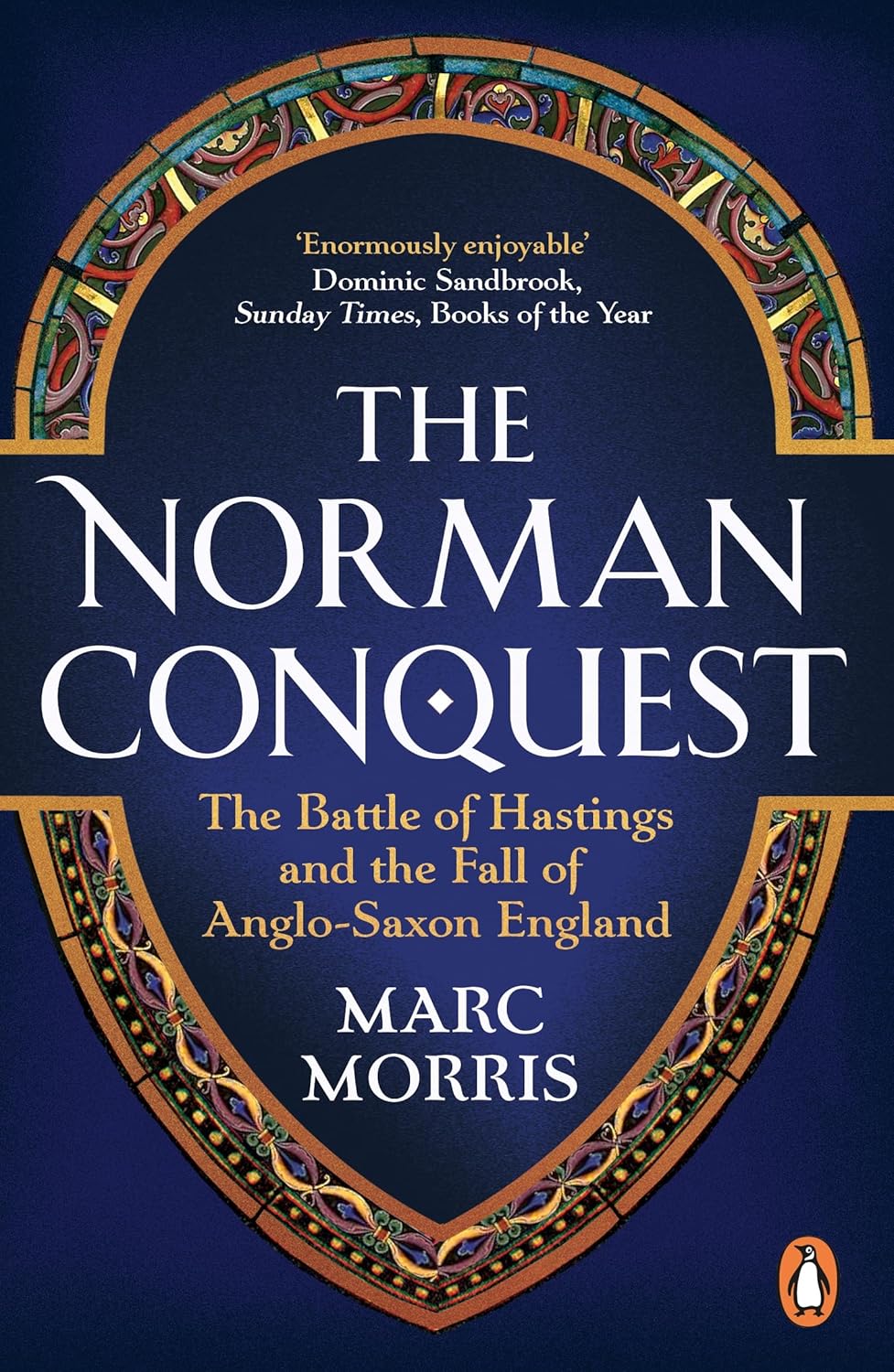
The Norman Conquest

Story of Britain: Before the Norman Conquest (Carousel Books) By R.J. Unstead
£2.88
in stock
The Norman Conquest: A Very Short Introduction (... by Garnett, George Paperback
-33%
£5.97
in stock
Mysteries of the Norman Conquest Unravelling the Truth of Battle of Hastings HBK

£8.50
in stock
The Norman Conquest by Morris, Marc Book The Cheap Fast Free Post

£9.83
in stock
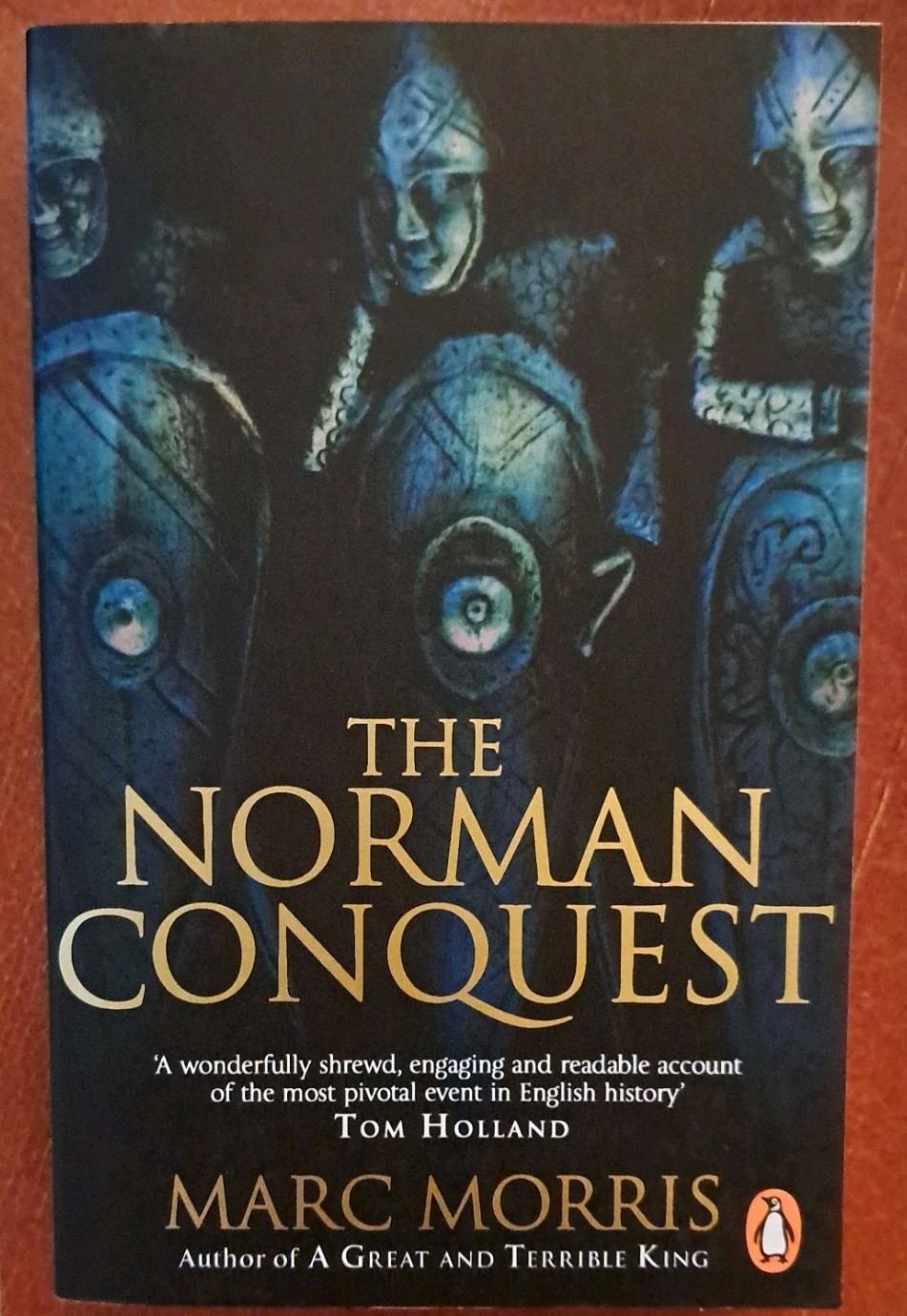
The Norman Conquest.by Morris New 9780099537441 Fast Free Shipping**
£10.25
in stock
‘I loved it. A suitably epic account of one of the most seismic and far-reaching events in British history’ Dan Snow
An upstart French duke who sets out to conquer the most powerful and unified kingdom in Christendom. An invasion force on a scale not seen since the days of the Romans. One of the bloodiest and most decisive battles ever fought.
Going beyond the familiar outline, bestselling historian Marc Morris examines not only the tumultuous events that led up to the Battle of Hastings in 1066, but also the chaos that came in its wake – English rebellions, Viking invasions, the construction of hundreds of castles and the destruction of England’s ancient ruling class. Language, law, architecture, even attitudes towards life itself, were altered forever by the Norman Conquest.
‘Retells the story of the Norman invasion with vim, vigour and narrative urgency’ Dan Jones, Sunday Times
‘A wonderful book’ Terry Jones
‘A much-needed, modern account of the Normans in England’ The Times
Read more
![[( Against Method )] [by: Paul K. Feyerabend] [May-2010]](https://i.ebayimg.com/images/g/Gw0AAeSwZbJodogC/s-l1600.jpg)


by limner
I had read the good reviews of this book so decided to give it a try. It is an engaging read that is easy to get through but left me in the unenviable position of feeling that I now have to read yet another book on the Norman Conquest before I can make up my mind about might have happened at this time.
( The paucity and partiality of contemporary sources means that anyone’s attempt at patching together a narrative of this time is strongly influenced by their own point of view and interpretation. )
As far as I can ascertain historians of this period are either for or against the Godwine family and the legitimacy of Harold claim to the throne and Marc Morris seems anti-Godwine. However I would have liked a clearer explanation of the basis of his stance since I found citing the opinions of other historians as acknowledged fact rather disingenuous and something that could be credibly countered by opposite opinions. (Nether approach fit my tastes in history, where I prefer fact and opinion to be clearly differentiated.)
Where I found him far more rigorous and convincing was in examining the better documented aftermath of the Conquest and the purpose behind Domesday book where I thought he made some interesting points.
This was a readable and engaging book but can’t be seen as a definitve account of the Norman Conquest. (For a completely different interpretation that is pro-Godwine but a more difficult read there is Ian Walker’s “Harold -the last Anglo-Saxon King”.)
by Andrewinsing
A good read for any history buff. The nature of the subject and the source material does mean it jumps around at times rather than following a strictly linear chronology and at times is a bit dry.
I read this after first reading the authors book on the Anglo Saxons which I found more interesting and easier to read. However, if you want to know about English history this book should definitely be included in your reading list. It is extremely well researched and referenced and takes an honest, “tell it like it is” approach without embellishment (which is why it is at times a bit dry).
by LaurenceB
So compelling and instructive, I have really enjoyed reading this book!
Marc Norris describes brillantly the outcome of his research, it’s an imersion in medieval times where the reader is led through the various events of the conquest.
I didn’t realize the magnitude of changes and the level of violence.
After 20 years, the Norman invasion had devasted Northern England and Yorkshire. The english were totally gone from the top society, replaced by Normans; middle ranks were forced into servitude. The creation of royal forests which displaced thousands people from their home, etc…
It was also an architectural revolution with new churches and the introduction of castles throughout the country.
This was quite a revolution that changed the face of England with such violence.
by JPS
This perhaps one of the best books – and certainly one of the best ones – for someone who is looking for a comprehensive overview of the Norman Conquest of England. While written in an engaging style for the so-called “general reader”, it is also an excellent starting point for whoever intends to “get more involved” with the various and multiple aspects related to the Conquest.
While, as a biography, it may not be as good as Douglas’ or David Bates’ biographies of William the Conqueror, it is more recent and therefore more up to date. It does however contain many elements of the Conqueror’s life, post pre and post Conquest, since this is both necessary and unavoidable to understand the events, and in particular William’s determination and relentlessness. Among the most up to dates elements are the developments related to the so-called Bayeux Tapestry (with which the book begins), but also assessments drawn from scholarly studies of the Domesday Survey and the Domesday Books (the plural is intentional as you will find out when reading the book) on the impact of the Norman Conquest on the society of the invaded and occupied country.
The author does make, as another reviewer has already mentioned, an excellent job of using, interpreting and reconciling the primary sources, including charters. He also, and just as importantly, has a talent for synthetizing and summarising in an entertaining way the huge amount of secondary sources.
This, for instance, allows Marc Morris to include some useful developments of the Normans in Normandy and the origins and history of the Duchy before 1066, which are partly drawn from David Bates’ works. Also included is a fair amount of context with regards to the Kingdom of England from Ethelred onwards and including the Danish (very hostile) take-over and the whole reign of Edward the Confessor. The point here is that more than a hundred pages of context are provided to the reader. Also included is an up to date bibliography which runs some sixteen pages. Abundant endnotes accompany each chapter and contain more references to both primary and secondary sources. Also worth mentioning are two good maps of England and Normandy and two good family trees of the English and the Norman families and their respective connexions, although they have been somewhat simplified and do not include all members (and in particular not all female members).
Another core strength of this book is the author’s care (and sometimes humour) when presenting and avoiding the biases contained in the sources. Contrary to another reviewer, I did not find any instances when the author himself expressed any bias. I also tended to find his explanations rather and often very convincing, including his analysis of the conflicting narratives of the death of Harold who, contrary to the official version, seems to have targeted by what was the equivalent of a death squad towards the end of the battle for reasons that the author presents rather clearly. Interestingly, some fifteen years later, Norman knights would try (and fail) doing something very similar at the battle of Dyrrachium against the Alexis Komnene, the byzantine Emperor.
While what constitutes the second part of the book includes the events of the year 1066, the last part of the part carries the story down to the death of the Conqueror while the last chapter includes an assessment and considerations on the aftermath down to the loss of Normandy and of most of the Plantagenet possessions in France. Here again, Marc Morris draws on a wide range of existing and more specialised books but he does so seamlessly without at any time giving the impression that his own work is a compilation and while keeping up the reader’s interest (or, at least, this reader’s interest!) at all times. Here again, he manages to deliver a well-informed, entertaining and very dramatic story while also making all the main points clearly. As already mentioned by another review, there is nothing ground breaking or even new in this book. However, there is just about everything we do know currently on the subject and it is offered in a very accessible way. All of this makes this book clearly worth five stars.
by Linda
I went to this book to flesh out what had happened just before the reign of Stephen as described in Catherine Hanley’s excellent book “Matilda.” I was a bit disconcerted, therefore, to be taken even further back to the reign of Edward the Confessor and from there, bewilderingly, back further to Cnut, Harold Harefoot and Hathacnut. It seemed a very long time before I eventually arrived at Chapter 11, Invasion.
However, looking back, I enjoyed reading about the events from 1016 onwards and the tussles between Harold Godwinson and his brother Tostig. This perspective on events was new to me and I learned quite a lot. I liked the way Marc Morris described the main bones of contention and gave names and motives to some of the lesser known participants in the power struggle. I intend to go back and read those earlier chapters again.
I also learned a lot about England after the conquest and this part of the book was the most interesting for me. It addressed lots of issues that had been puzzling me, such as the extent to which Normans integrated with Anglo-Saxons and the details of the economic and political structures during this period. The coverage of the Domesday Book was very good.
The narrative is lively and interesting throughout. It doesn’t dwell on the horrors but it doesn’t skim over them either. Nor does it dwell too long on topics that can bog down the story, such as trends in architecture, religion, art and governance, although they are all touched on and brought to life.
I read it quite quickly because it was very easy to read and I enjoyed it. There is a good use of sources. They are quoted appropriately and it was interesting to hear different perspectives on the same events, which served as a useful reminder that histories are necessarily biased and it is very hard to get at the truth. Nevertheless I think Marc Morris has done a very good job of showing us something very close to the truth of the Norman Conquest and allowed us to draw our own conclusions.
I’ll definitely read more books by him as the whole period from the Dark Ages to the War of the Roses is fascinating and I like the lucidity of his style.
by Tina Wootton Dunford
This is the second book I have read by this historian. I did, in fact, buy this book because I so enjoyed the previous one, AngloSaxons. I felt The Norman Conquest was a logical follow up and am enjoying it greatly. I shall continue reading other books by this author…
by Cire
I had fun reading this book. Never a dull moment. Enough information to satisfy my curiosity about this most important event in english history.
by Cliente Kindle
Really appreciated this book and the it furnished me with a new view of the norman conquest.
Will surely look for other books from Mr Morris